By Khalid Collier / Staff Writer

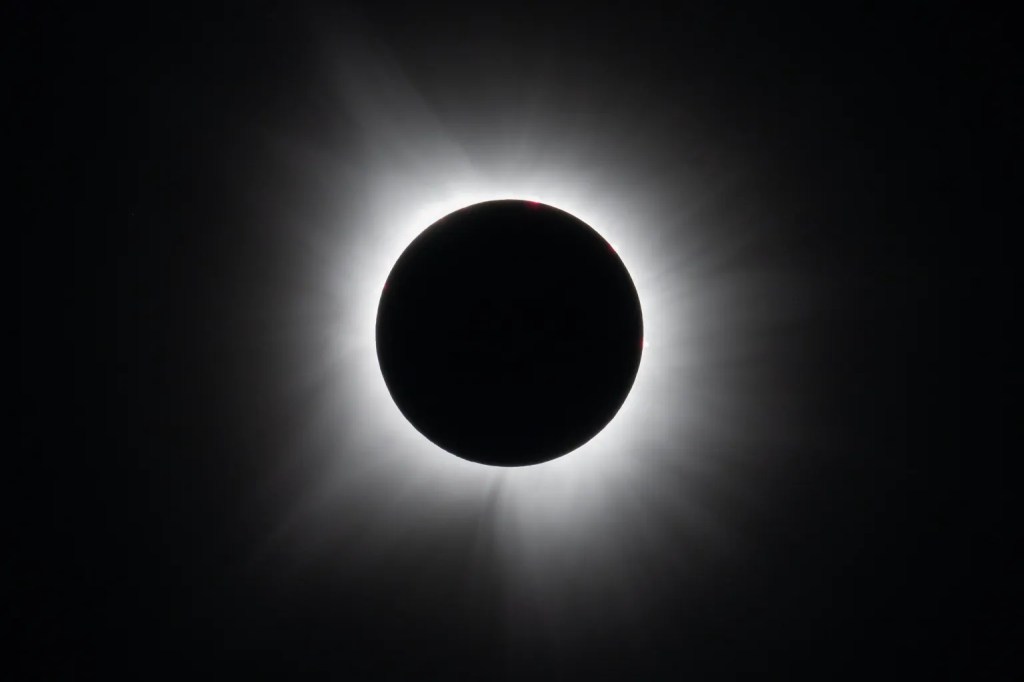
Much Like the rest of the country, everyone on the Missouri Valley College campus was tuned in to see the moon eclipse the sun last week with the student body joining with faculty to bear witness to the rare event.
The last time the United States saw a total solar eclipse was on August 21, 2017 and before that it was in 1979. The rarity of the event made it so special. Campus members gathered mostly in front of the Malcolm Center looking over the football field to view the moon moving in front of the sun.
For some, like junior student Diamond Deepa, this was their first experience with an eclipse.
“I’m glad I got to view this one because I honestly don’t remember seeing the one that happened in 2017,” he said.
This wasn’t the case for older members of the crowd, like professor Phillip Gresham, who were in the path of totality in 2017.
“I remember it vividly,” he said. “I was on top of a coffee shop in Colombia watching it.”

While the rarity of the event made it special, the actual eclipse left some viewers underwhelmed because Marshall did not get a totality eclipse it was only about 80% covered. This made it darker outside but mostly just looking like really good shade.
Junior student Naz Reid said: “I expected more honestly.”
Physics and astronomy professor Christine Russell noted that those who missed this eclipse will either have to travel or wait to see another.
“The next eclipse will be in Iceland in the year 2026,” she said. “But the next one we will be able to see in North America won’t be for at least 20 more years.”
 The Delta
Leave a comment