By Chris Post / Editor-in-Chief
Unexpected repairs to deteriorating storm sewers beneath two Marshall streets are highlighting the challenges of maintaining an aging drainage system that city officials acknowledge has historically received more attention when problems arise than before they develop.
City Administrator J.D. Kehrman said the city is working toward a more aggressive inspection and maintenance program while addressing deteriorating infrastructure and the financial challenges associated with underground repairs.
“We have an antiquated stormwater system,” Kehrman said.
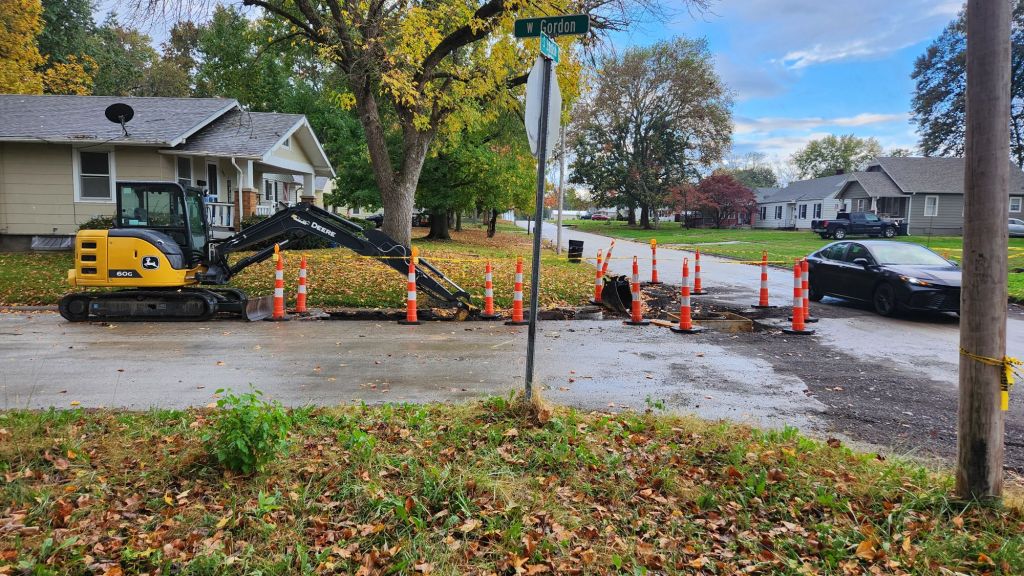
Recent repairs along Benton Street and near the intersection of Gordon and English streets illustrate the problem. Both projects involve replacing deteriorated sections of storm sewer infrastructure, although the scope and complexity of the work differ considerably.
On Benton Street, between North Lake and South Lake streets, crews are replacing approximately 100 feet of corrugated metal drainage pipe. The elliptical pipe, measuring 22 inches by 36 inches, is approximately 40 years old.
The problem came to the city’s attention after a homeowner noticed a hole and reported it.
Kehrman said the concrete structures at either end of the damaged section appear to be in good condition, allowing crews to replace the deteriorated pipe between them.
The replacement pipe will cost approximately $16,200, not including other expenses associated with the project.
Kehrman said the lifespan of storm sewer infrastructure varies depending on factors such as soil conditions and the depth at which pipes are installed. A lifespan of 40 to 50 years is generally considered good.
The project near Gordon and English streets is considerably more complicated.
That drainage system includes six interconnected junction boxes connected by 12-inch pipes, with an 18-inch pipe carrying stormwater away from the area. Crews are working through the system and expect to continue repairs toward Salt Pond.
The city has spent approximately $17,000 on the Gordon and English streets project so far.
During an October City Council meeting, officials said approximately 400 feet of drainage infrastructure was involved in the English Street project.
The unexpected repairs have added to the city’s regular maintenance responsibilities and raised questions about the condition of other portions of Marshall’s stormwater system.
Kehrman acknowledged that the city’s approach to maintaining storm sewers has historically been reactive rather than preventive.
City crews conduct inspections, clean drainage ditches and remove debris from stormwater collectors following significant rainfall. However, Kehrman said the city is now pursuing more aggressive inspection and maintenance practices to identify problems before they become major failures.
The city has also discussed developing a comprehensive stormwater management plan with engineering consultants.
Kehrman said engineers advised the city to get a better handle on existing repair needs before undertaking such a study. Records of repairs, inspections and other information collected by city crews could eventually provide the foundation for a more complete assessment of the system.
That information would help officials identify priorities and determine where future investments are needed.
Funding remains a significant obstacle. Marshall does not have a dedicated stormwater utility to provide a separate revenue stream for maintaining its drainage system. Instead, storm sewer repairs must compete with other municipal expenses for available general revenue.
Kehrman said the city maintains a general repair budget, but unexpected failures can make it difficult to anticipate annual costs.
The street tax recently approved by Marshall voters cannot be used to pay for underground stormwater infrastructure. The revenue is restricted to surface repairs, leaving the city to finance storm sewer maintenance and replacement through other sources.
That distinction means the city must maintain the drainage infrastructure beneath its streets without being able to draw on the voter-approved street tax to pay for the work.
The city has also increased its attention to stormwater infrastructure in recent years, drawing on public and private engineering expertise.
Kehrman said engineers play an important role in ensuring that municipal projects comply with state and federal environmental requirements, including those administered by the Missouri Department of Natural Resources and the Environmental Protection Agency.
For residents, the most visible signs of trouble may be deteriorating pavement, holes or drainage problems.
Kehrman encouraged residents who notice potential stormwater problems to contact the city’s municipal services department or City Hall. He said reports from residents have helped officials identify and prioritize needed repairs.
While the city continues addressing immediate failures, developing a more comprehensive understanding of Marshall’s stormwater infrastructure will be important to establishing a long-term maintenance strategy.
For now, the challenge is balancing those longer-term needs against the immediate expense of keeping the city’s aging drainage system functioning.


Leave a Reply